
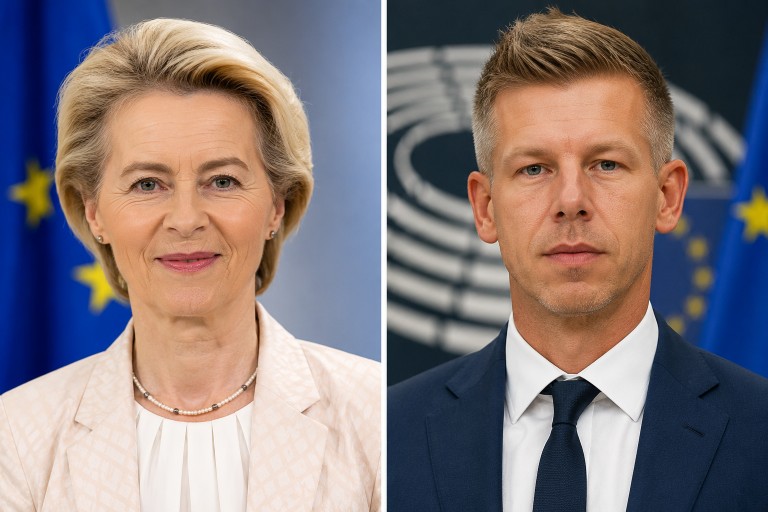
Hungary and the European Commission have struck a deal to release billions of euros in European Union funds that were previously frozen. This follows Hungary’s pledge to undertake several reforms aimed at addressing issues of transparency, governance, and the management of EU resources. European Commission President Ursula von der Leyen acknowledged that Hungary has started making progress on these fronts by implementing measures such as enhancing anti-corruption defenses and improving oversight procedures. Another significant step is Hungary’s decision to join the European Public Prosecutor’s Office, which is expected to bolster efforts in tackling financial irregularities.
The agreement is set to provide Hungary with a substantial financial boost totaling €16.2 billion, as confirmed by Hungarian Prime Minister Péter Magyar. He expressed that this financial package will greatly benefit Hungary’s economic growth and investment strategies, with the funds earmarked for projects in infrastructure, energy security, housing, transportation, and business development. Additional funding could be released upon further reforms, including those focusing on higher education and academic governance.
A noteworthy aspect of the agreement is its implication for Hungarian students, who will be able to fully participate in the Erasmus exchange program starting from the next academic year. This development is expected to enhance educational opportunities and cultural exchanges for Hungarian students within the European Union.
Despite the funding breakthrough, migration policy continues to be a contentious issue in the dialogue between Hungary and the EU. Prime Minister Magyar reiterated Hungary’s commitment to maintaining stringent border controls and its stance against establishing migrant camps within the country. He stressed the importance of protecting the EU’s external borders while adhering to European commitments.
This funding agreement represents a significant move towards mending relations between Hungary and the European Commission, following years of disagreements over governance, judicial reforms, and the allocation of the EU budget. The accord is seen as a pivotal moment in the ongoing efforts to align Hungary more closely with EU expectations and standards.