
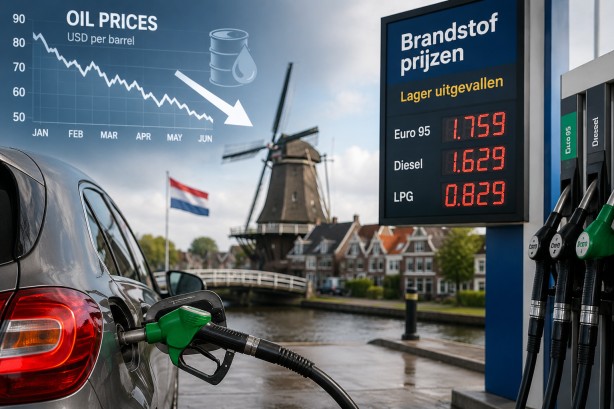
In a recent development that could signal relief for motorists, oil prices witnessed a significant drop as the United States and Iran agreed to pause military actions. This decision has led to a decrease in Brent crude oil prices, which fell from over €88 per barrel last week to just above €81. The anticipation is that this decline will soon be reflected in the fuel prices across the Netherlands, potentially easing the burden on consumers.
The strengthening of the euro has further contributed to this decline. Since oil transactions are conducted in US dollars, a stronger euro means that European buyers can import oil at a lower cost. This currency dynamic plays a vital role in how oil prices affect local markets, especially in regions like Europe where currency fluctuations can directly impact import costs.
Despite the dip in crude oil prices, consumers in the Netherlands have yet to see a significant change at the pump. The advisory gasoline price remains at €2.634 per liter, which is just shy of the record high of €2.646 recorded earlier in the year. This surge in fuel prices was initially driven by the escalation of tensions involving Iran, which began in late February.
Industry analysts suggest that while the reduction in oil prices is a positive sign, it may take some time before these changes are reflected in retail fuel prices. Typically, there is a delay of several days between shifts in global oil markets and their impact on fuel stations. Nevertheless, the current trend offers hope for a gradual decrease in fuel costs for drivers in the Netherlands.